The Angler’s Guide to Lake Norman: Best Bait, Tackle, and Seasonal Hotspots
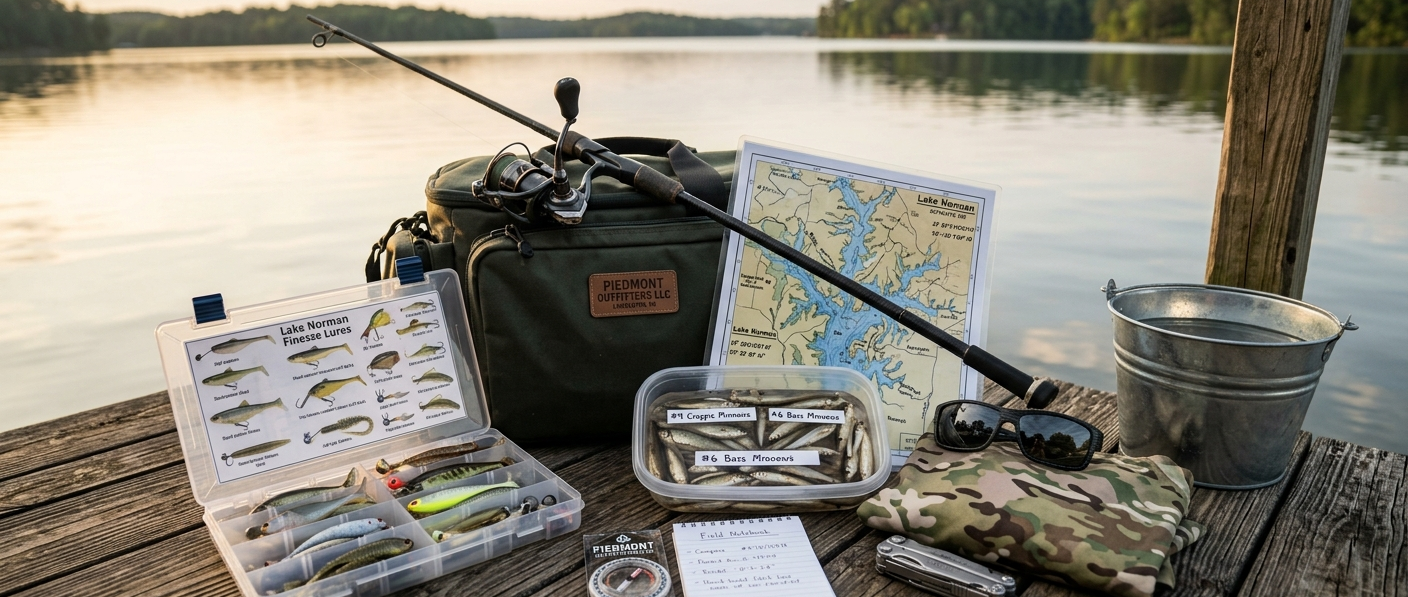
Any angler who has spent a Saturday on Lake Norman knows it is a world-class fishery that requires a thick skin and a sharp strategy. With over 32,000 acres of water, hundreds of miles of shoreline, and heavy boat traffic, "The Inland Sea" can challenge even the most experienced fishermen. If you show up with generic big-box lures and a basic setup, you’re likely to go home empty-handed.
Cracking the code on Lake Norman requires local intelligence. At Piedmont Outfitters USA, our Pro-Staff brings decades of collective experience fishing the NC Piedmont. We’ve watched the lake change over the years, tracked the migration of spotted bass, and know exactly what it takes to trigger a bite when the pressure is on. Here is our definitive local guide to tackling Lake Norman.
Understanding Lake Norman’s Ecosystem
To catch fish on Lake Norman, you have to understand what you're up against. Unlike some of our muddier river systems in North Carolina, Norman is relatively clear, deep, and heavily structured with thousands of private docks, bridge pilings, and submerged brush piles.
The lake’s food chain revolves heavily around threadfin and gizzard shad, which dictates the movement of its primary targets:
Spotted Bass: The undisputed kings of the lake's deeper structures. They are aggressive, school heavily, and love deep humps and long points.
Largemouth Bass: Found primarily in shallower water, back-pocket creeks, and tight to dock posts.
Crappie: Plentiful, high-quality, and highly dependent on deep brush piles and bridge fenders.
Striped Bass & Perch: Constantly on the move, chasing massive bait schools through the main river channels.
Because the water is clear, the fish have excellent vision. When water temperatures in the North Carolina Piedmont shift, these species move predictably between shallow spawning grounds and deep-water sanctuaries. Your job is to match their depth and their diet.
The Ultimate Bait & Tackle Strategy
When it comes to Lake Norman fishing tips, our number one rule is simple: match the hatch, or you’re wasting your time. Because the fish see a massive amount of pressure, presentation is everything.
1. The Live Bait Advantage
Artificial lures have their place, but nothing triggers a school of finicky Norman fish like a lively, perfectly sized bait swimming on a light line.
Crappie Fishing: Do not just ask for generic "minnows." The crappie on Norman can be incredibly selective about size depending on the time of year. Matching the current forage hatch with premium, oxygen-packed #4 or #6 crappie minnows is often the difference between a loaded livewell and a frustrating day on the water.
Bass & Stripers: If you are chasing big largemouth or schooling spots, rigging up lively bass minnows on a drop-shot or a split-shot rig will out-produce artificials on high-pressure weekends every single time.
2. Going Artificial: Finesse is Key
If you prefer throwing plastic and metal, you need to lean into finesse tactics to combat the clear water.
Shad Patterns: Look for freshwater fishing lures for Lake Norman that feature ultra-natural shad finishes. Translucent silver, sexy shad, and clear-ghost patterns work best.
Go-To Rigs: A 3/16-oz shaky head paired with a green pumpkin finesse worm, or a properly weighted drop-shot rig dropped vertically into deep structure, are absolute staples on this lake. When the wind picks up, a ghost-shad colored jerkbait or a small swimbait reeled slowly across points will call the spots up from the depths.
Seasonal Hotspots and Tactics
Where you launch depends entirely on the calendar. Lake Norman fish are notorious wanderers, but they follow a distinct seasonal blueprint.
Spring and Summer: The Transition to Deep Cover
Early in the spring, the action is in the creeks. Spawning fish push shallow into places like Mountain Creek and McCrary Creek, making dock-skipping with jigs and soft plastics incredibly effective.
However, as the North Carolina summer heat sets in and the recreational boat traffic picks up, the fish flee the chaos.
Where to go: Look for main-lake points, deep humps, and submerged brush piles in 15 to 25 feet of water.
The Tactic: This is prime time for deep-dropping. Use your electronics to find brush piles near river channels, drop a lively bass minnow or a nightcrawler directly over the top, and hold on tight.
Fall and Winter: Following the Forage
When the water temperatures cool down, the shad begin a massive migration back into the creek arms.
Where to go: Focus on the mid-to-back sections of major creeks and around bridge fenders where baitfish bunch up.
The Tactic: Keep a close eye on your sonar for massive bait balls. Utilize a vertical live-bait presentation or slow-roll a small swimbait directly through the schools of feeding spots and stripers.
Gear Up Before You Launch
The best gear on the market is only as good as the local knowledge behind it. Before you hitch up the boat and head out to the ramp, stop by Piedmont Outfitters USA in Lincolnton right off Highway 150.
We keep the largest and healthiest live bait selection in the region fully stocked—including perfectly sized crappie and bass minnows, crickets, and premium nightcrawlers. Grab a cold drink, stock your bait tank, and get a real-time water clarity and bite report directly from our Pro-Staff so you can head to the lake with a game plan that works.